
Wildlife Guide 🐬
Dolphins · Manatees · Sea Turtles · Shorebirds · Land Animals
Anna Maria Island is a wildlife sanctuary. From dolphins surfing boat wakes to sea turtles nesting on moonlit beaches, the island's natural world is extraordinary. Please observe all wildlife from a respectful distance and never feed or approach wild animals. For fish ID and Florida saltwater regulations, visit the Fishing page.
 📅 Year-round🐬
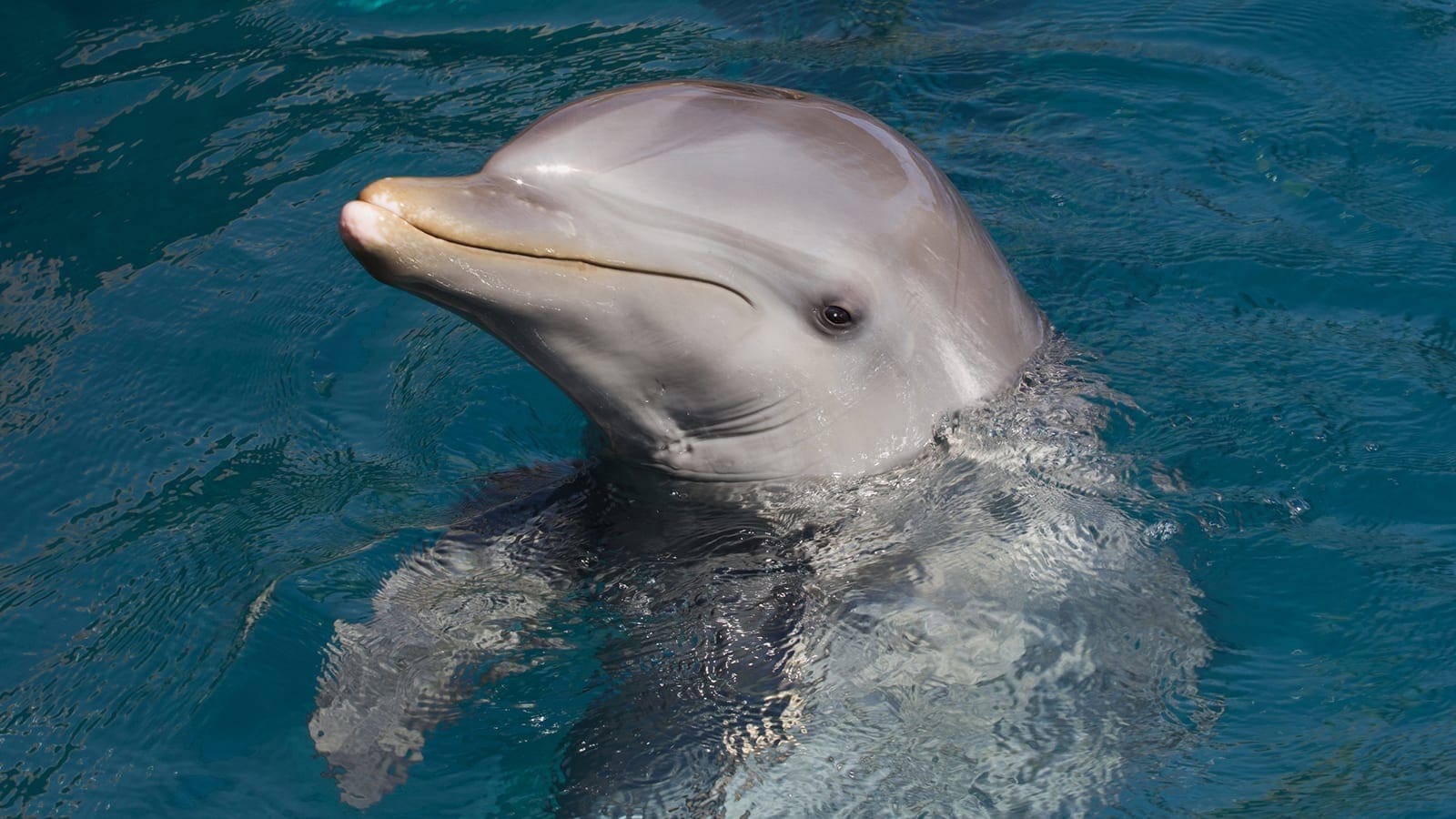
Bottlenose Dolphin
📍 Gulf waters, Tampa Bay, near Bean Point
AMI's most beloved residents. Bottlenose dolphins are spotted almost daily, often surfing boat wakes, hunting in the shallows, or leaping near Bean Point. The island has a resident pod that locals recognize by their dorsal fins.
Fun Fact
Dolphins can swim up to 22 mph and live 40–60 years. The resident AMI pod has been documented for decades.
⚠️ Important
Never feed or approach dolphins — it's illegal under the Marine Mammal Protection Act. Book an ethical tour through the Eco-Tours section.
 📅 Most common Apr–Oct · Migrates to warmer water Nov–Mar🦭
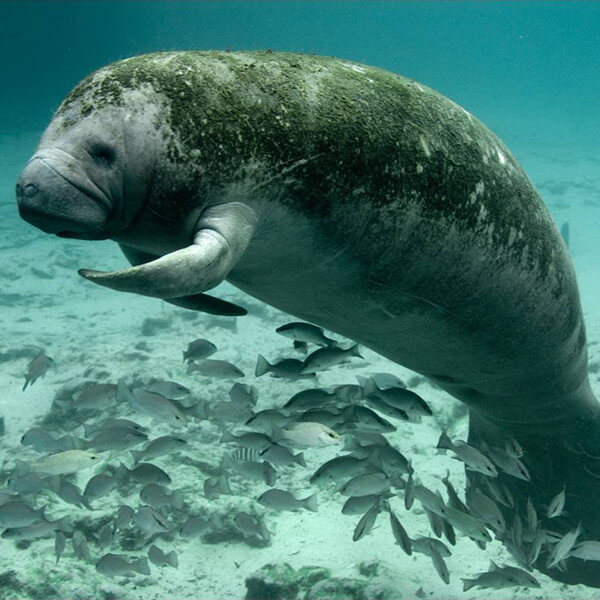
West Indian Manatee
📍 Palma Sola Bay, warm water outflows, shallow bay areas
Florida's gentle giants — slow-moving, herbivorous sea mammals that graze on seagrass. Manatees are most commonly spotted around Anna Maria Island from April through October. In winter, they migrate to warmer inland rivers and congregate near power plant warm-water outflows throughout Florida.
Fun Fact
Manatees must surface to breathe every 3–5 minutes. They can eat up to 10% of their body weight in seagrass daily.
⚠️ Important
It is illegal to touch, feed, or harass manatees. If you see an injured manatee, call FWC Wildlife Alert: 1-888-404-3922.
 📅 Nesting: May–October🐢
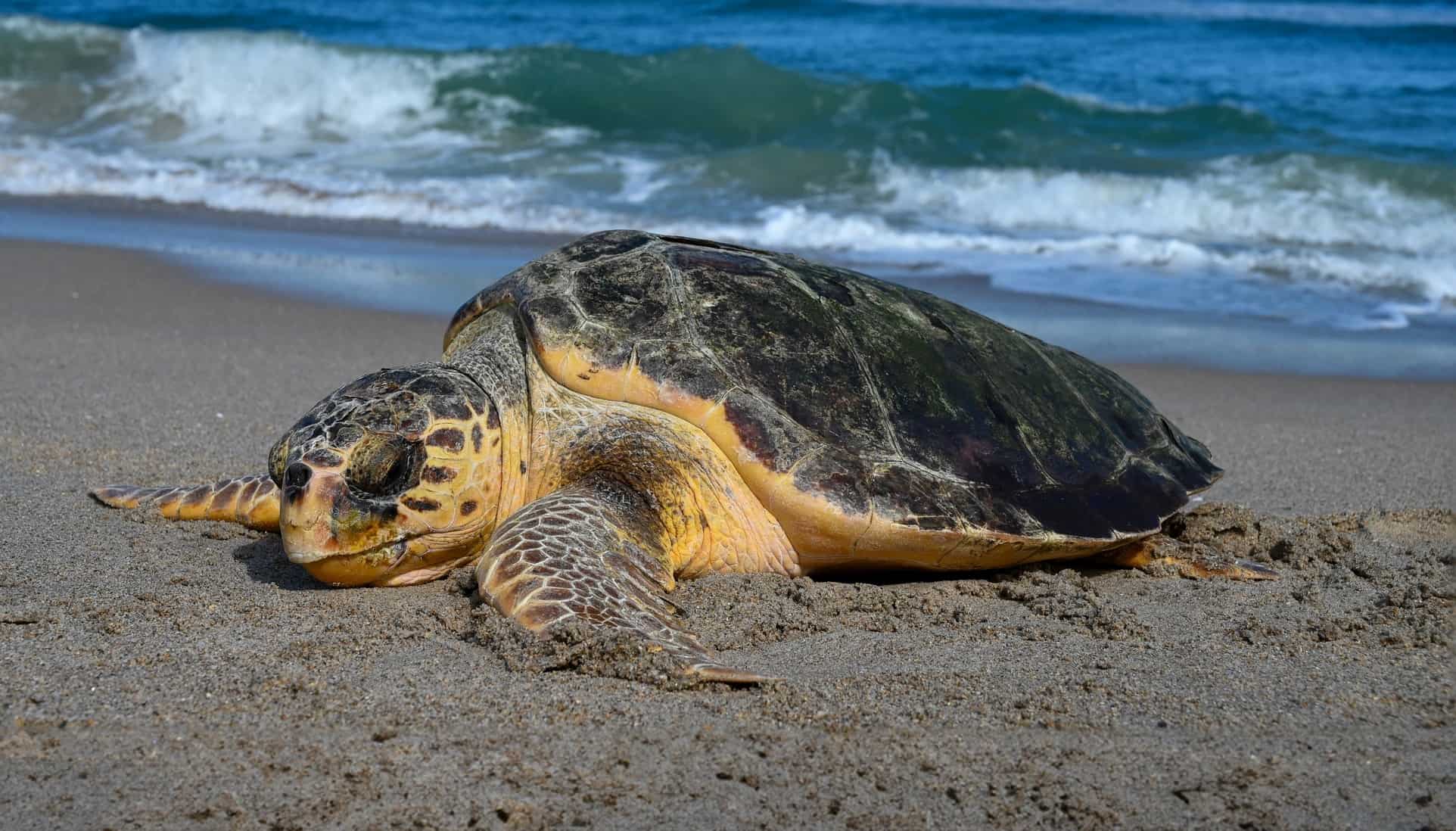
Loggerhead Sea Turtle
📍 Gulf beaches, especially at night during nesting season
AMI is an important nesting beach for loggerhead sea turtles. Females return to the beach where they were born to lay eggs. Volunteers from AMI Turtle Watch patrol the beach at dawn to mark and protect nests.
Fun Fact
Loggerheads can live 70+ years and travel thousands of miles across the ocean. A single female may lay 3–5 nests per season.
⚠️ Important
Use red lights (not white) on the beach at night during nesting season. Fill in any holes you dig. AMI Turtle Watch: (941) 778-5638.
 📅 Nesting: June–September🐢
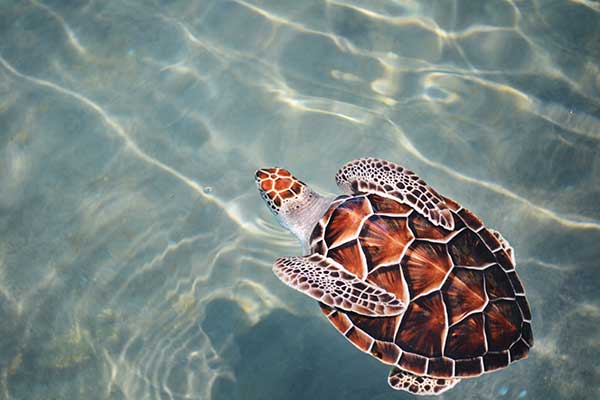
Green Sea Turtle
📍 Gulf beaches
Less common than loggerheads but increasingly spotted on AMI beaches. Green turtles are named for the color of their fat, which comes from their herbivorous diet of seagrass. Juveniles are often seen in the shallow bay waters.
Fun Fact
Green turtles are the only sea turtles that are strictly herbivorous as adults, grazing on seagrass and algae.
⚠️ Important
Same beach rules as loggerheads — red lights only, no disturbance of nests.
 📅 April–October (peak)🪸
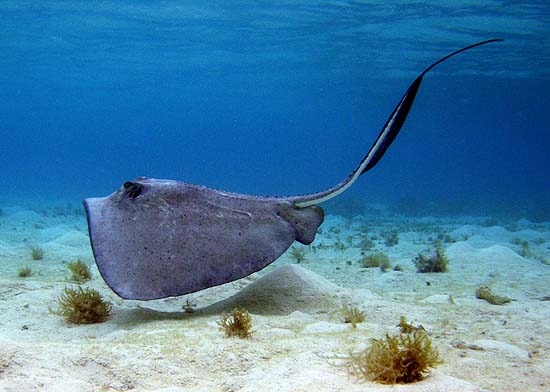
Southern Stingray
📍 Shallow Gulf waters, sandy bottom near shore
Stingrays are common in AMI's shallow Gulf waters, especially in warmer months. They bury themselves in the sand to hide from predators and hunt for mollusks and crustaceans. They are harmless unless accidentally stepped on.
Fun Fact
The 'stingray shuffle' — dragging your feet as you walk into the water — alerts stingrays to move before you step on them.
⚠️ Important
Always do the stingray shuffle when wading in the Gulf. If stung, immerse the wound in hot water and seek medical attention.
 📅 Spawning: May–June (full moons)🦀
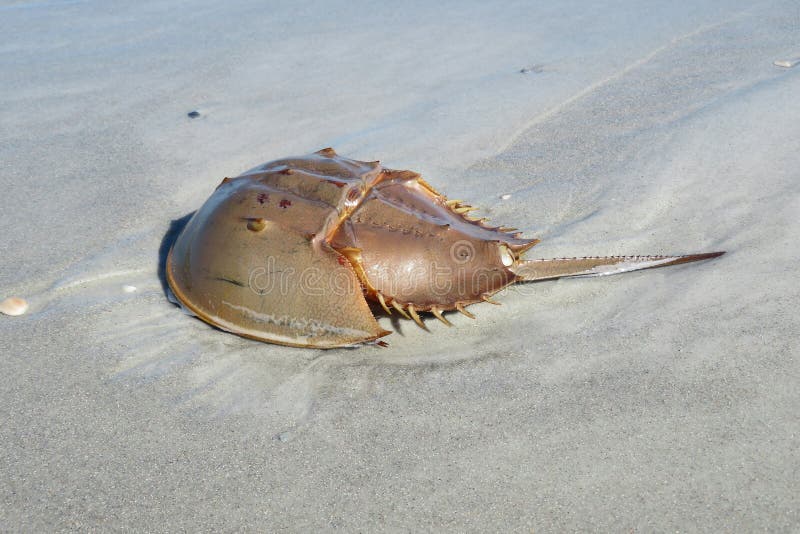
Horseshoe Crab
📍 Bay beaches, especially Palma Sola Bay shoreline
Ancient creatures that have existed for 450 million years — older than dinosaurs. Horseshoe crabs come ashore to spawn during full and new moons in late spring. Despite their name, they are more closely related to spiders than crabs.
Fun Fact
Horseshoe crab blood is bright blue and is used to test the safety of medical equipment and vaccines. A single crab can be worth thousands of dollars to the biomedical industry.
⚠️ Important
If you find a horseshoe crab flipped on its back, gently flip it back over by the sides of its shell — never by the tail.
 📅 Year-round🦢
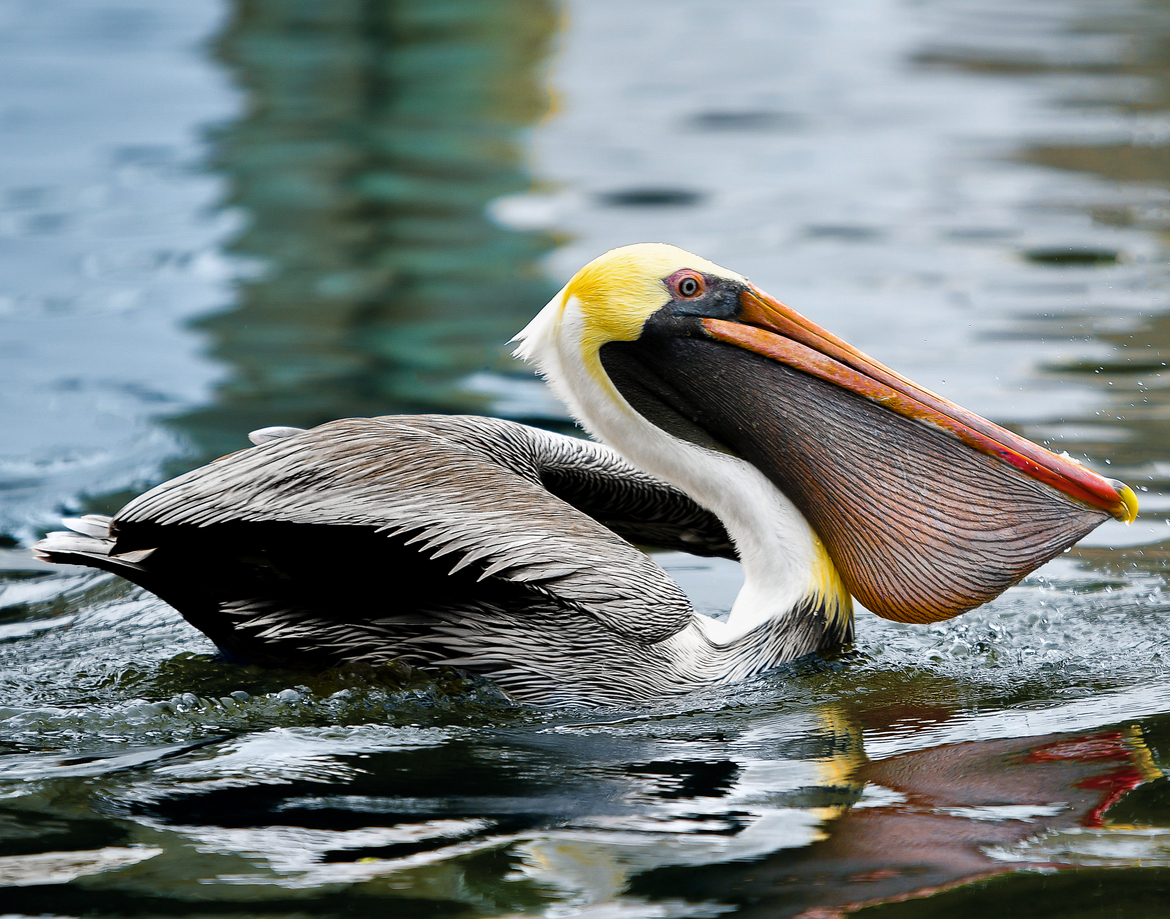
Brown Pelican
📍 Piers, fishing docks, beaches, near fishing boats
The most iconic bird on AMI. Brown pelicans are expert dive-bombers, plunging from 30+ feet to catch fish. They're a constant presence at the Rod & Reel Pier, City Pier, and wherever fishermen are cleaning their catch.
Fun Fact
Brown pelicans were nearly extinct in the 1970s due to DDT. They made a remarkable comeback and were removed from the endangered species list in 2009.
⚠️ Important
Never feed pelicans — they can become dependent on handouts and lose their natural hunting instincts. Fishing line is deadly to them; always dispose of it properly.
 📅 Year-round (most visible Oct–Apr)🦩
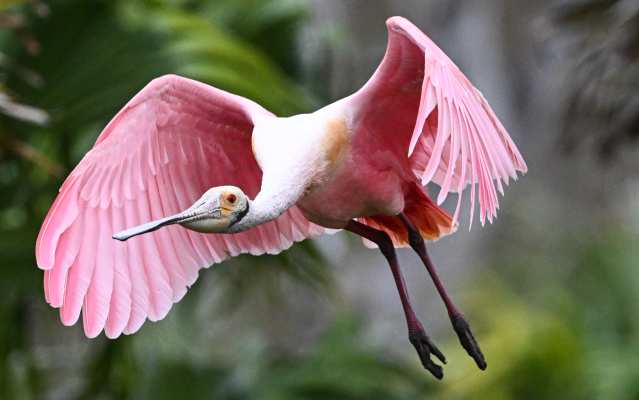
Roseate Spoonbill
📍 Shallow bay flats, mangrove edges, Palma Sola Bay
One of Florida's most spectacular wading birds. The roseate spoonbill's vivid pink plumage comes from the carotenoid pigments in the crustaceans it eats. They sweep their distinctive spoon-shaped bill side to side through shallow water to catch prey.
Fun Fact
Spoonbills are not flamingos — they're actually related to ibises and herons. Their pink color comes entirely from their diet.
⚠️ Important
Best spotted at low tide on the bay side of the island. Bring binoculars — they're stunning up close.
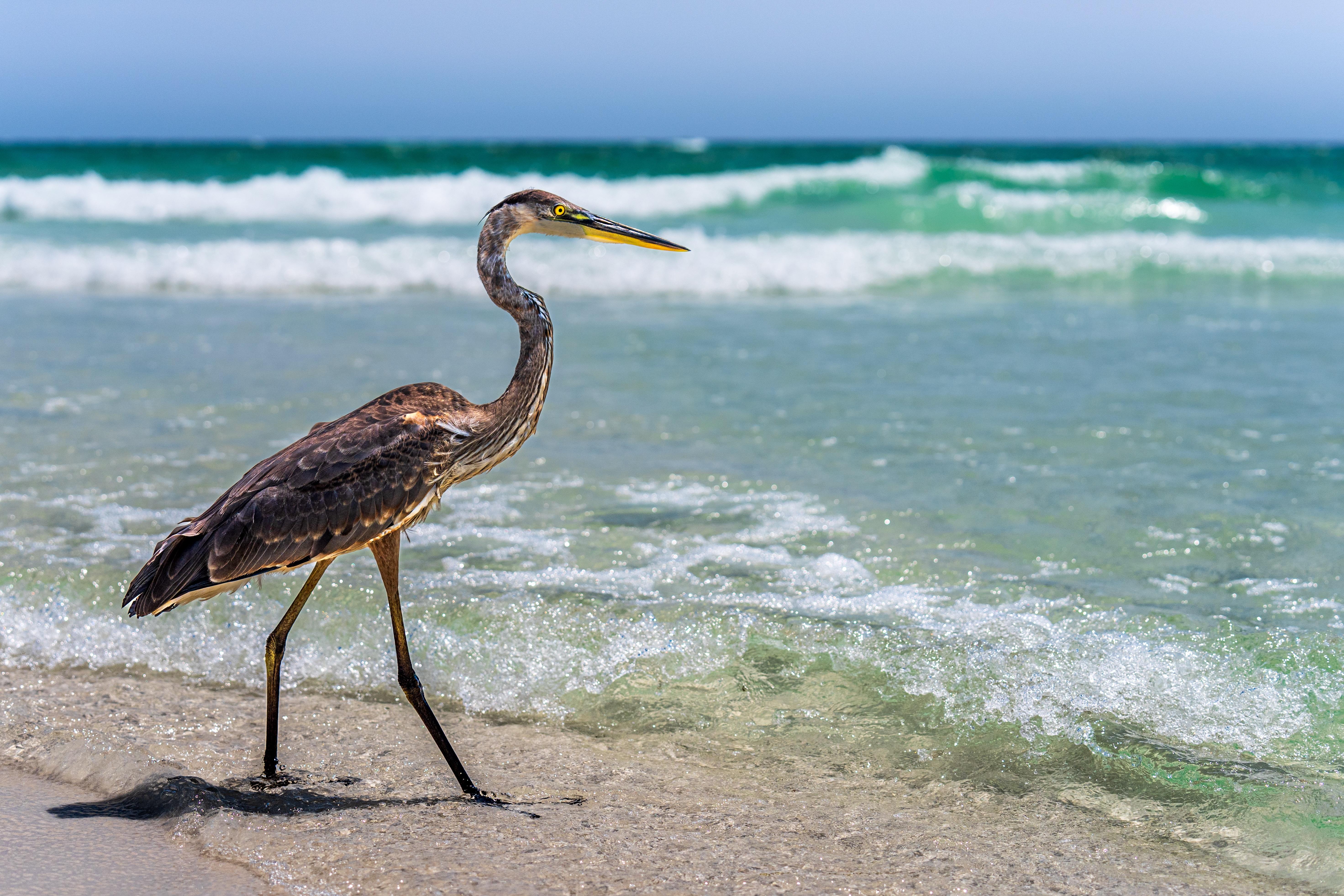 📅 Year-round🦤
Great Blue Heron
📍 Shorelines, piers, mangrove edges, bay flats
The largest North American heron, standing up to 4.5 feet tall. Great blue herons are patient hunters that stand motionless for minutes before striking with lightning speed. They're a common sight along AMI's bay shoreline and near the piers.
Fun Fact
Despite their size, great blue herons weigh only 5–8 lbs. Their bones are hollow, and they can fly at 30 mph.
⚠️ Important
They're surprisingly approachable but don't crowd them. Watch for the explosive strike when they spot a fish.
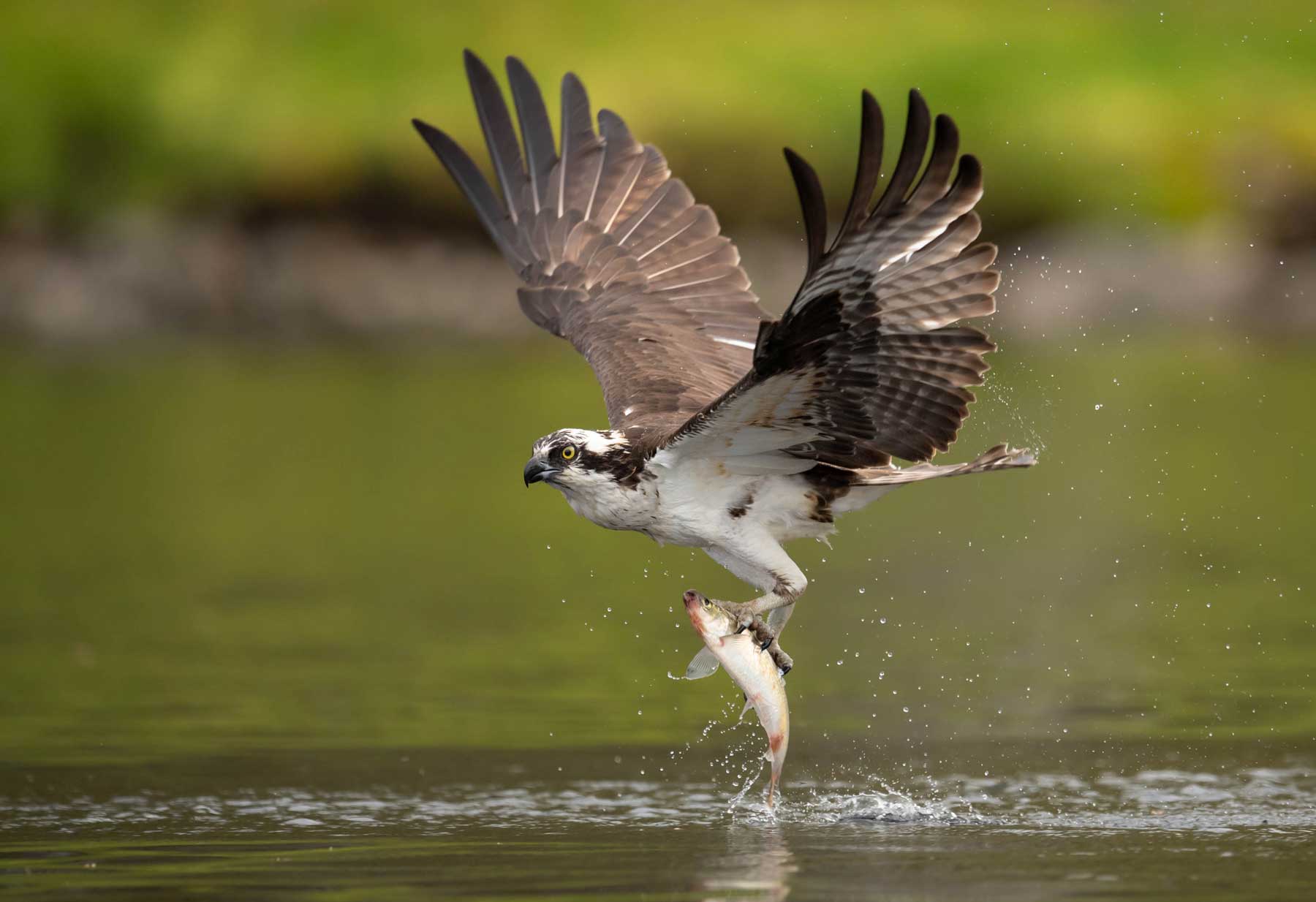 📅 Year-round🦅
Osprey
📍 Nesting platforms, channel markers, tall trees near water
AMI's resident 'fish hawk.' Ospreys are the only hawk that dives feet-first into the water to catch fish. They have reversible outer toes and spiny foot pads to grip slippery fish. You'll see their large stick nests on channel markers and utility poles throughout the island.
Fun Fact
Ospreys have a 98% success rate when diving for fish. They can carry fish weighing up to 4 lbs in flight.
⚠️ Important
Look for nesting platforms along the Manatee Avenue causeway. Osprey pairs return to the same nest year after year.
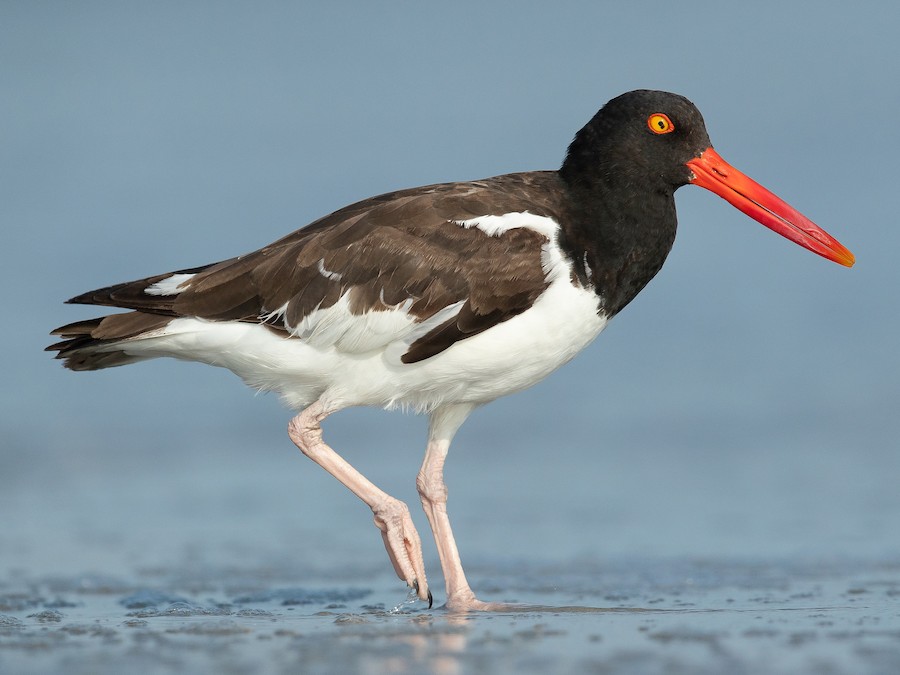 📅 Nesting: March–September · Year-round resident🐦
American Oystercatcher
📍 Bean Point, Coquina Beach, rocky shorelines, oyster bars
A striking black-and-white shorebird with a brilliant orange-red bill built for prying open oysters, mussels, and clams. American Oystercatchers nest directly on the beach in shallow scrapes — one of five nesting shorebird species protected on Manatee County beaches. They are bold and vocal, giving loud piping calls when disturbed.
Fun Fact
Oystercatchers are monogamous and often mate for life. Their strong, laterally flattened bill is perfectly shaped to slip between bivalve shells and sever the adductor muscle.
⚠️ Important
Respect posted nesting area signs from March through September. Nests are just shallow scrapes in the sand — nearly invisible.
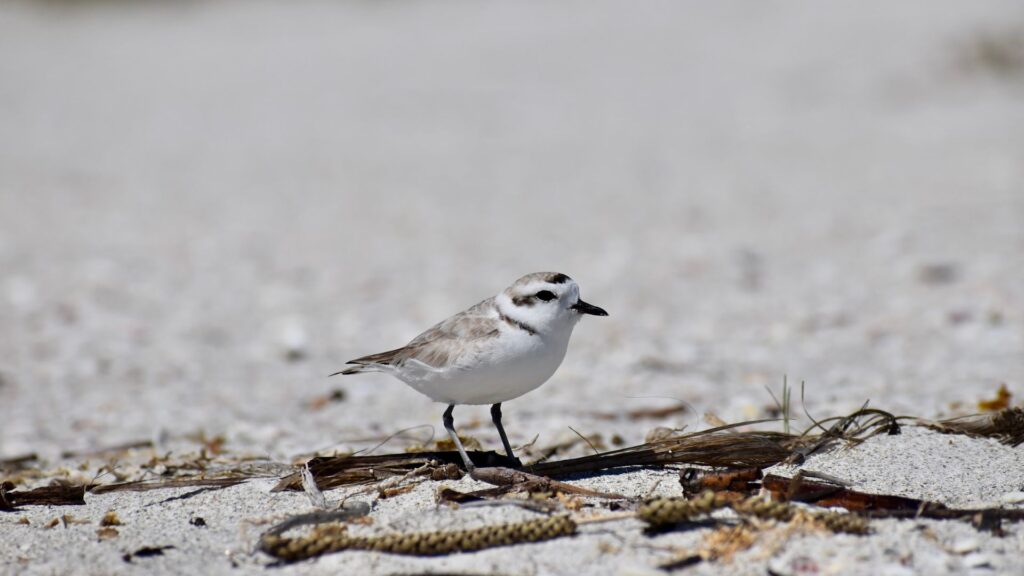 📅 Nesting: March–September · Year-round resident🐦
Snowy Plover
📍 Coquina Beach, open sandy beaches above the tide line
One of Florida's most vulnerable nesting shorebirds. Snowy Plovers are tiny, pale birds that nest in open sandy areas above the tide line — their eggs and chicks are nearly invisible against the sand. Manatee County beaches are critical nesting habitat, monitored by the AMI Turtle Watch & Shorebird Monitoring program.
Fun Fact
Snowy Plovers are so small they can be blown over by a strong gust of wind. Their eggs are perfectly camouflaged — three speckled eggs in a shallow sand scrape that looks like debris.
⚠️ Important
Stay behind posted nesting ropes from March through September. Keep dogs leashed on nesting beaches — even a brief disturbance can cause nest abandonment.
 📅 Nesting: April–September · Migrant🐦
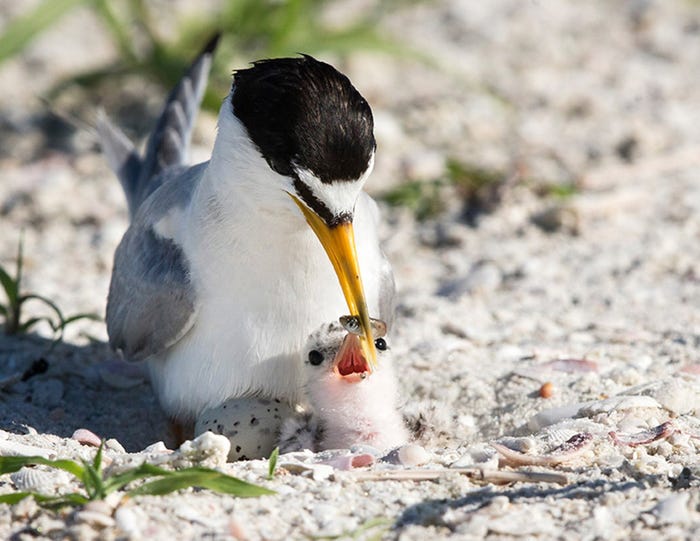
Least Tern
📍 Coquina Beach, open sandy beaches
North America's smallest tern nests in colonies directly on open sandy beaches. They are fierce defenders of their nests, dive-bombing intruders much larger than themselves. A colony nested successfully on Anna Maria Island in 2024 — monitored by the AMI Turtle Watch & Shorebird Monitoring program.
Fun Fact
Least Terns weigh less than 2 oz but will fearlessly dive-bomb dogs, foxes, and humans that approach their nests. They migrate from South America each spring.
⚠️ Important
Respect nesting area ropes and signs during spring and summer. Least Tern nests are barely visible — just a small scrape in the sand with 1–3 eggs.
 📅 Nesting: April–August · Year-round resident🐦
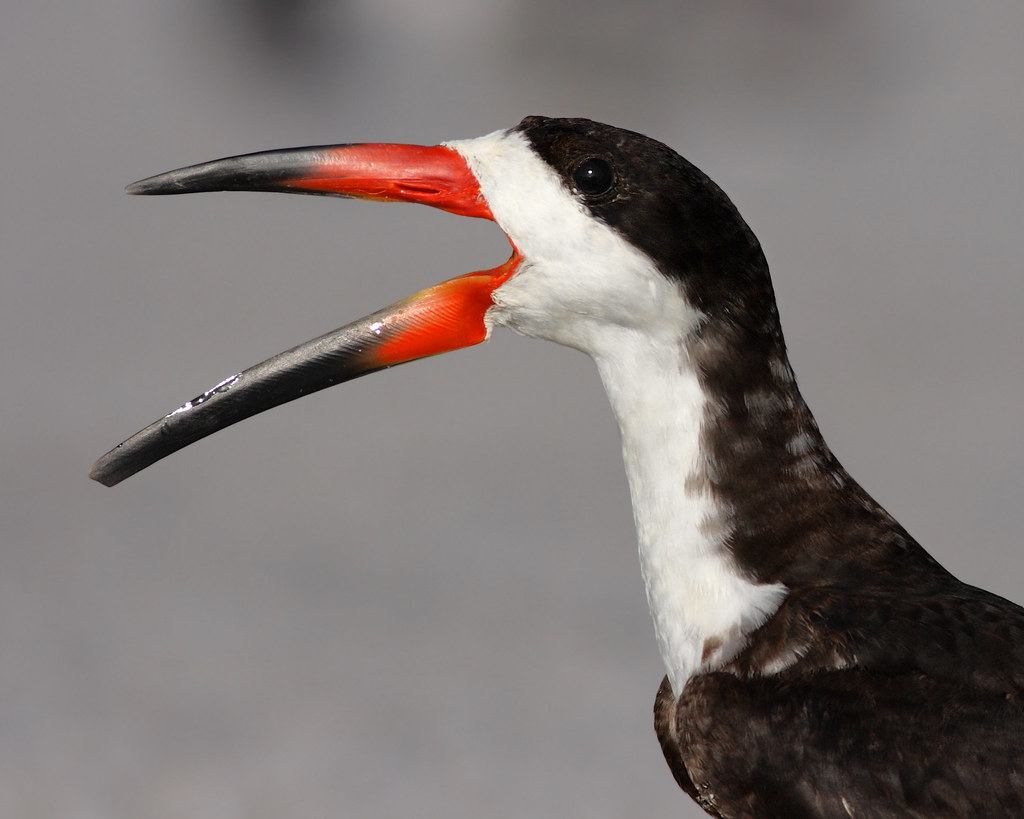
Black Skimmer
📍 Coquina Beach, Bradenton Beach shoreline
A striking black-and-white seabird with a distinctive red-and-black bill where the lower mandible is longer than the upper. Black Skimmers feed by flying low over the water with their lower bill slicing the surface to snap up fish. State-threatened and protected. Coquina Beach is one of their last nesting sites on AMI.
Fun Fact
Black Skimmers are the only North American bird with a lower mandible longer than the upper. They feed almost entirely by touch, skimming the water at speeds up to 35 mph.
⚠️ Important
During nesting season (April–August), give nesting areas a wide berth — look for posted signs on the beach. Nests are just scrapes in the sand and easy to miss.
 📅 Nesting: March–August · Year-round resident🐦
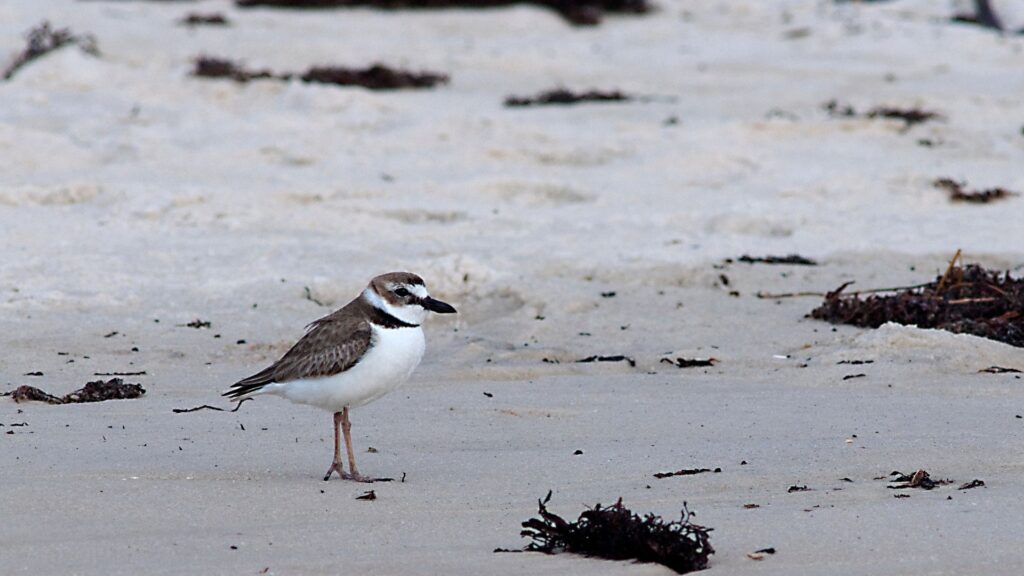
Wilson's Plover
📍 Bean Point, Coquina Beach, tidal flats
A medium-sized plover with a thick, heavy black bill — larger than other plovers. Wilson's Plovers nest on open sandy beaches and tidal flats, feeding primarily on fiddler crabs. They are year-round residents of Manatee County and one of five protected nesting shorebird species on AMI beaches.
Fun Fact
Wilson's Plovers have the largest bill relative to body size of any North American plover — perfectly adapted for catching and crushing fiddler crabs.
⚠️ Important
Look for them on tidal flats at low tide, often near fiddler crab colonies. Their thick bill distinguishes them from Snowy Plovers.
 📅 Year-round (most common spring–fall)🐦
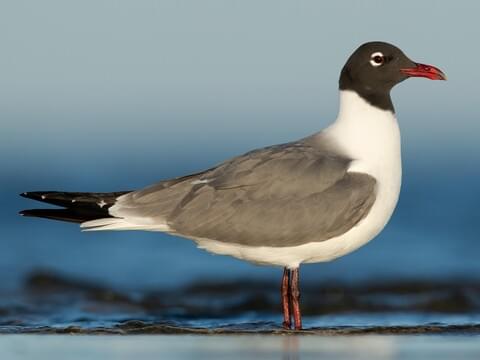
Laughing Gull
📍 Beaches, piers, parking lots, anywhere food is present
The most common gull on AMI and the Gulf Coast. Laughing Gulls are bold, opportunistic, and loud — their distinctive ha-ha-ha-ha call is the soundtrack of the beach. They will steal food right out of your hand if given the chance. Named for their call, which sounds like maniacal laughter.
Fun Fact
Laughing Gulls are kleptoparasites — they regularly steal food from Brown Pelicans by landing on their heads and grabbing fish from their pouches mid-catch.
⚠️ Important
Do not feed the gulls — it causes aggressive behavior and disrupts natural feeding patterns. Keep food covered on the beach.
 📅 Year-round🐦
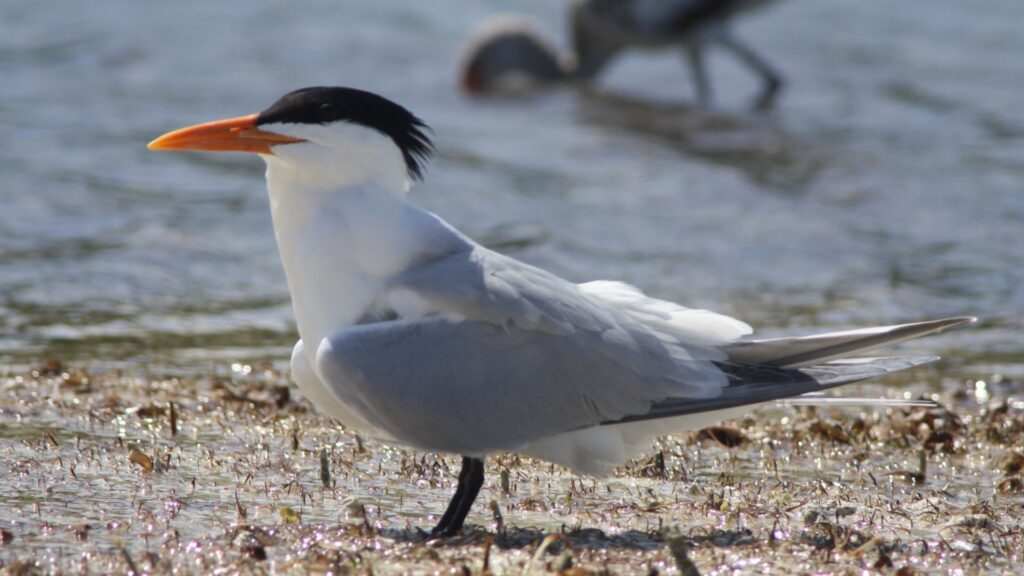
Royal Tern
📍 Gulf beaches, fishing piers, near inlets
A large, elegant tern with an orange bill and a shaggy black crest. Royal Terns are a constant presence on AMI beaches, often seen diving for fish just beyond the surf zone. They are larger than Least Terns but smaller than Caspian Terns, and frequently rest in large flocks on the beach.
Fun Fact
Royal Terns can dive from up to 30 feet to catch fish. They are one of the few bird species where both parents incubate the egg — which is laid directly on bare sand with no nest material.
⚠️ Important
Look for them resting in mixed flocks with Laughing Gulls on the beach. Their orange bill and black cap distinguish them from Caspian Terns (red bill) and Least Terns (yellow bill).
 📅 Winter–Spring (Oct–May) · Migrant🐦
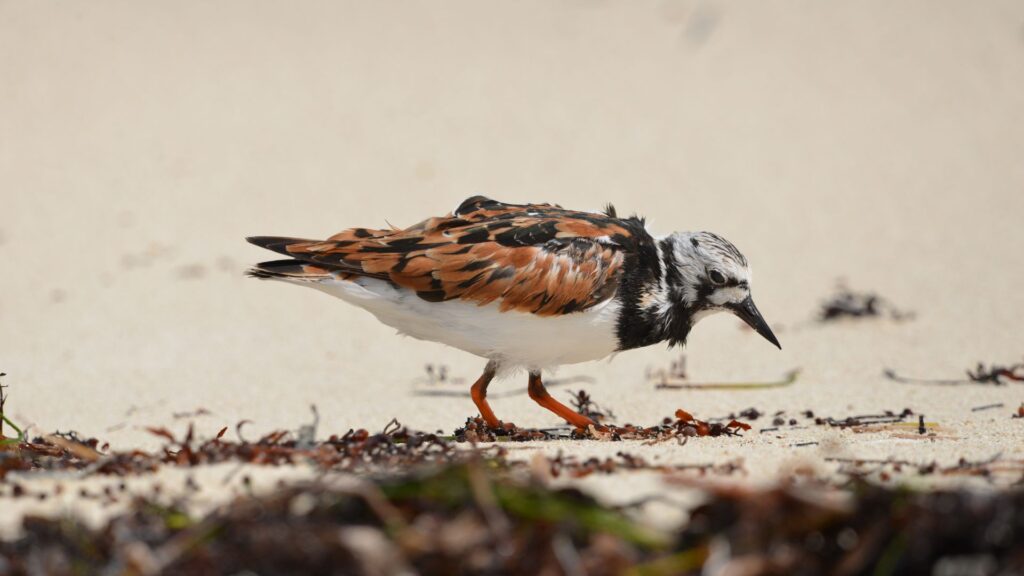
Ruddy Turnstone
📍 Rocky shorelines, jetties, Coquina Beach
A stocky, colorful shorebird with a striking harlequin pattern of black, white, and rusty-red. Ruddy Turnstones are named for their habit of flipping over stones, shells, and seaweed with their short upturned bill to find invertebrates hiding underneath. Common on AMI beaches during winter and spring migration.
Fun Fact
Ruddy Turnstones migrate from the Arctic to South America and back each year — a round trip of up to 15,000 miles. They have been recorded flipping objects up to 5x their own body weight.
⚠️ Important
Look for them on rocky shorelines and jetties, methodically flipping shells and debris. Their bold patterning makes them easy to identify even at a distance.
 📅 Winter–Spring (Oct–May) · Migrant🐦
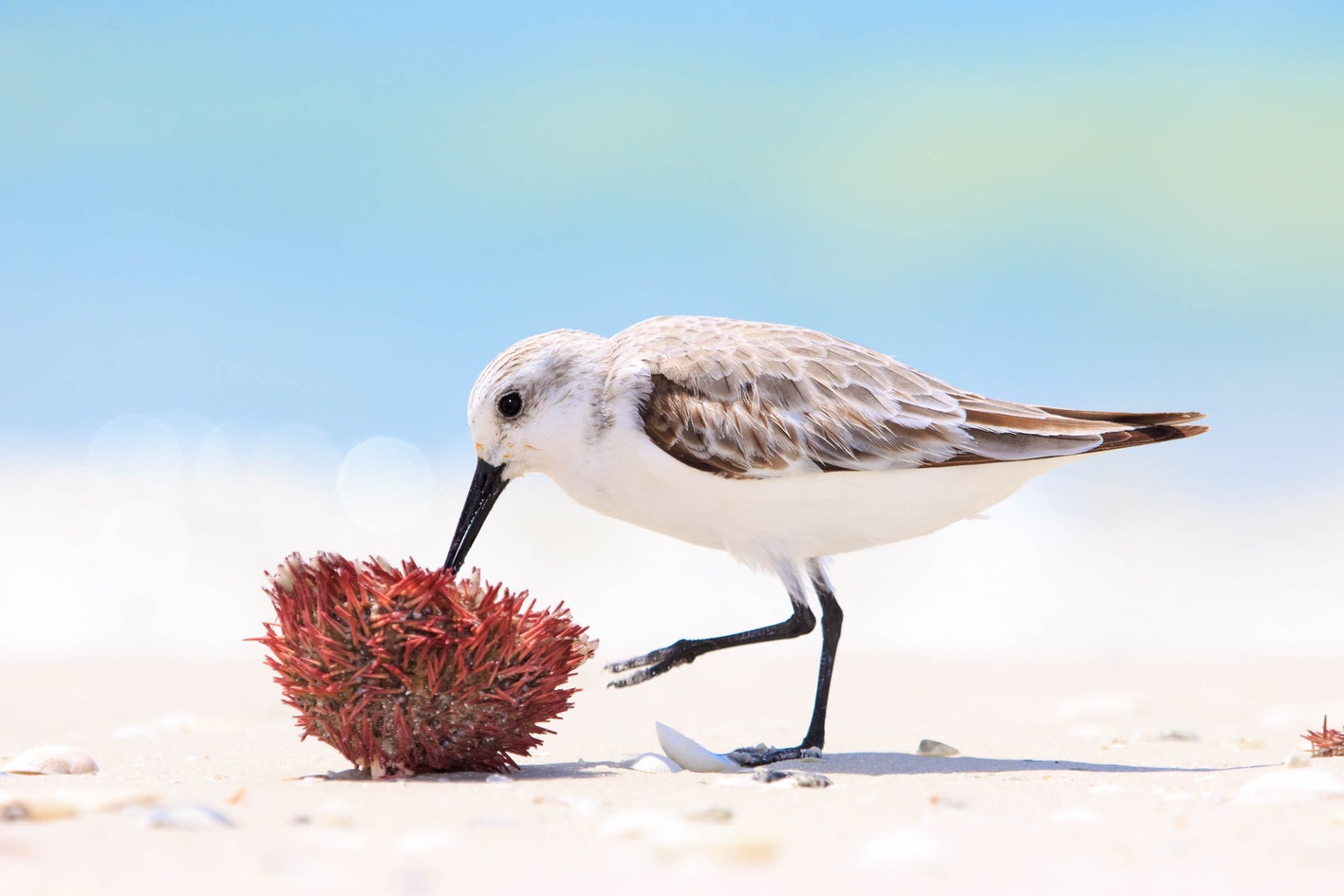
Sanderling
📍 Gulf beaches, wave wash zone
The quintessential 'wave-chasing' shorebird. Sanderlings run in and out with the waves, probing the wet sand for small invertebrates. They're pale gray-and-white in winter plumage, making them easy to spot against the dark wet sand. Common on AMI beaches from fall through spring.
Fun Fact
Sanderlings breed in the high Arctic tundra and migrate up to 6,000 miles to winter on tropical beaches. They run at speeds up to 19 mph.
⚠️ Important
Watch for them at the water's edge, chasing waves. Their pale winter plumage and constant running behavior make them easy to identify.
 📅 Year-round (most active at night)🦝
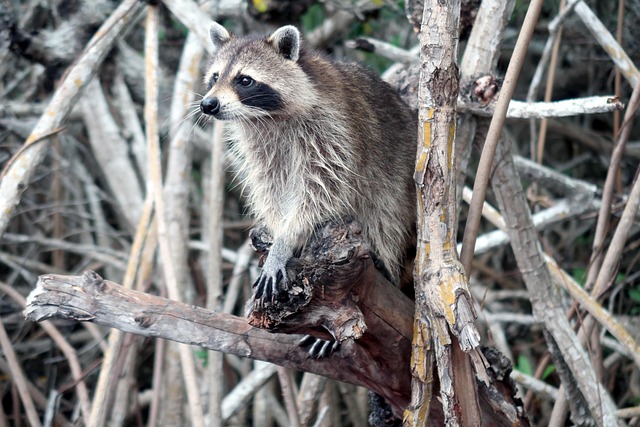
Raccoon
📍 Residential areas, dumpsters, near restaurants, beach access paths
Raccoons are highly intelligent, adaptable mammals found throughout AMI. They're opportunistic feeders and have learned to exploit human food sources. They're most active at night.
Fun Fact
Raccoons can open latched containers, turn doorknobs, and remember solutions to tasks for up to 3 years.
⚠️ Important
Never feed raccoons. Secure trash cans with bungee cords or locking lids. Raccoons can carry rabies — do not approach.