
Shell Guide 🐚
Identify the shells you find on AMI's Gulf beaches
Anna Maria Island's Gulf beaches are excellent for shell collecting, especially after storms and during low tide. The best shelling is at Coquina Beach and the north tip of the island (Bean Point). Always check shells are empty before collecting — live shells must be left in place.
Take this guide to the beach
Download the Your Guide to AMI app to access the full shell guide, beach conditions, and more — right from the sand.
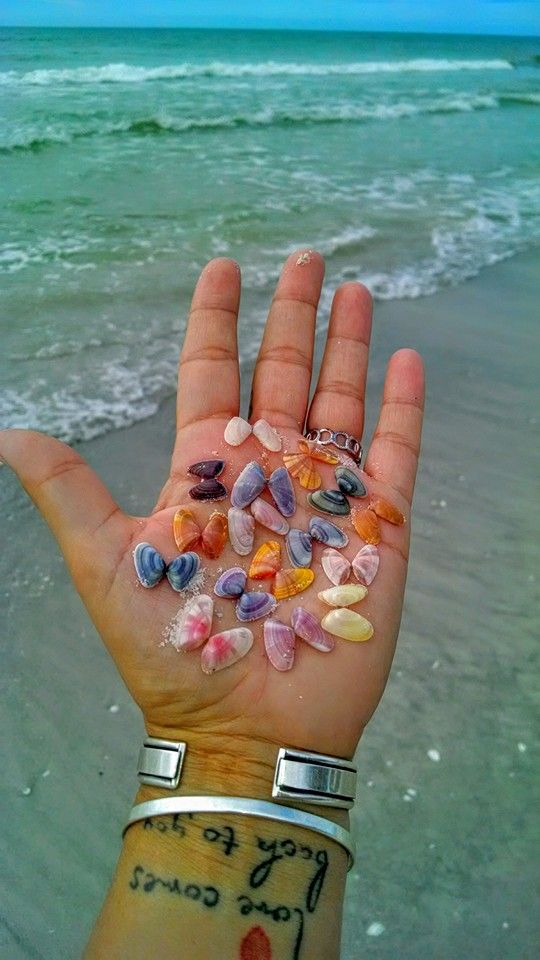 Common
 Coquina Shell
🐚Donax variabilis
ID Tip
Tiny fan-shaped bivalve. Watch for live ones digging back into wet sand after a wave washes over them.
Fun Fact
Coquina Beach on AMI is named after these little shells! They live in the swash zone and can filter-feed in seconds.
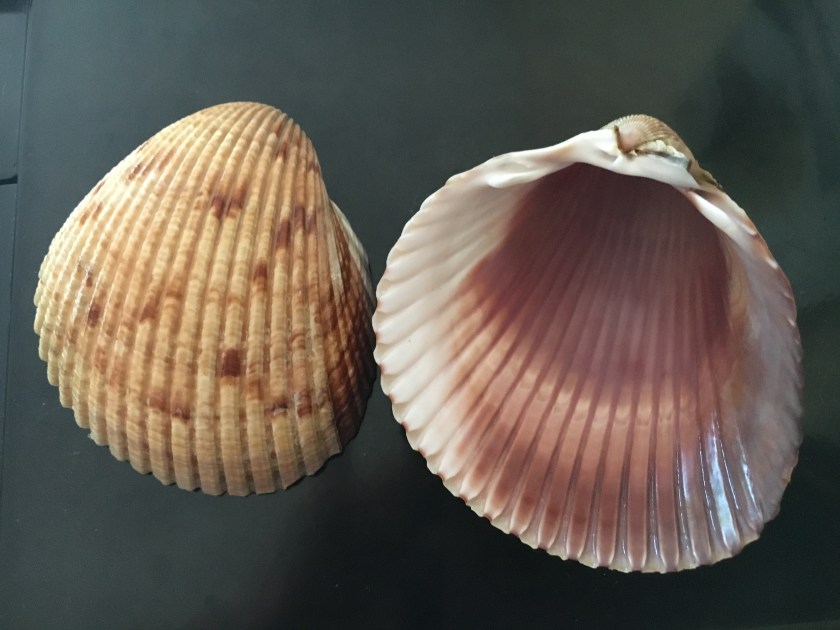 Common
 Cockle Shell
🐚Dinocardium robustum
ID Tip
Perfectly symmetrical fan shape with 32–36 evenly-spaced radial ribs. One of the easiest shells to identify.
Fun Fact
The Giant Atlantic Cockle is the largest cockle in North America. Empty halves are often found in pairs still hinged together.
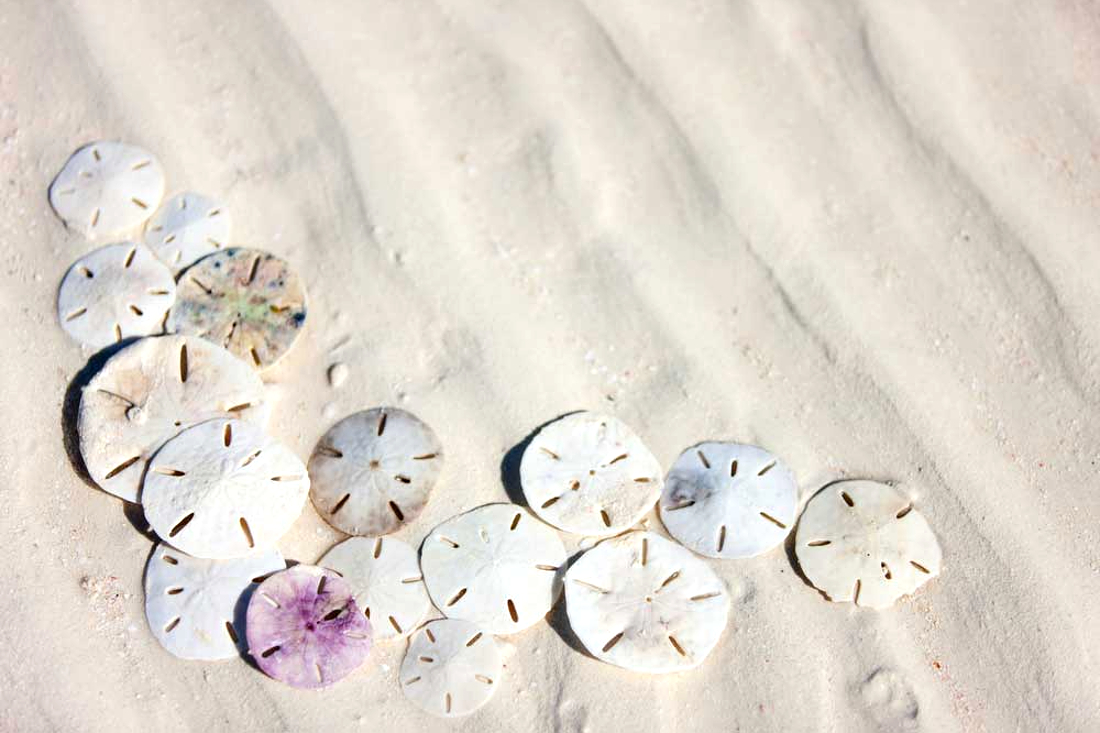 Uncommon
 Sand Dollar
⭐Mellita quinquiesperforata
ID Tip
Flat, disc-shaped with a 5-petal flower pattern on top. IMPORTANT: If it's brown and fuzzy — it's alive! Put it back.
Fun Fact
Sand dollars are actually a type of sea urchin. The 5-petal pattern on top is called a petaloid and marks where their tiny tube feet emerge.
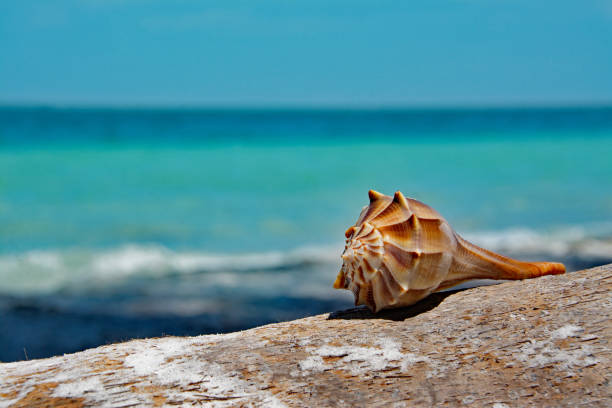 Uncommon
 Lightning Whelk
🌀Sinistrofulgur sinistrum
ID Tip
The only Florida shell that regularly spirals LEFT (counterclockwise) — the opposite of almost every other shell. Large, heavy, and unmistakable.
Fun Fact
Native Americans used lightning whelk shells as tools, cups, and ceremonial objects. Spiraling left is extremely rare in nature. Note: Florida's official state shell is the Horse Conch.
 Uncommon
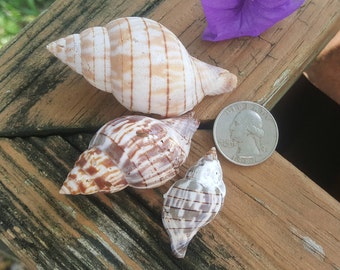
 Banded Tulip Shell
🌷Cinctura lilium
ID Tip
Smooth, elongated with a pointed spire and distinctive reddish-brown or orange bands spiraling around the body.
Fun Fact
Banded tulips are active predators — they chase down other mollusks and even other tulip shells! They're cannibals of the shell world.
 Uncommon
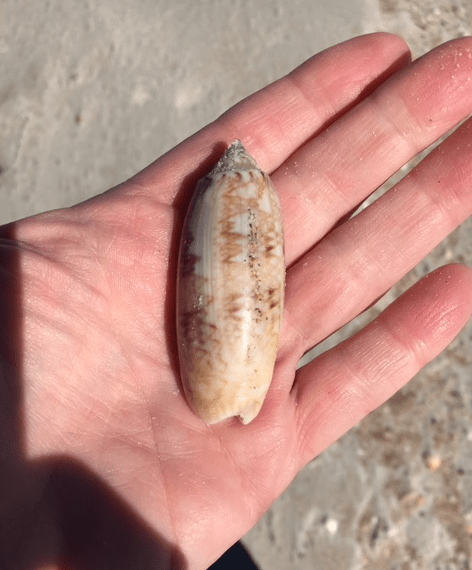
 Lettered Olive Shell
🫒Oliva sayana
ID Tip
Smooth, shiny, cylindrical with a pointed tip. The zigzag brown markings look like cursive writing — hence 'lettered.'
Fun Fact
Lettered olives are fast movers, plowing through wet sand just below the surface hunting for coquinas and other bivalves.
 Uncommon
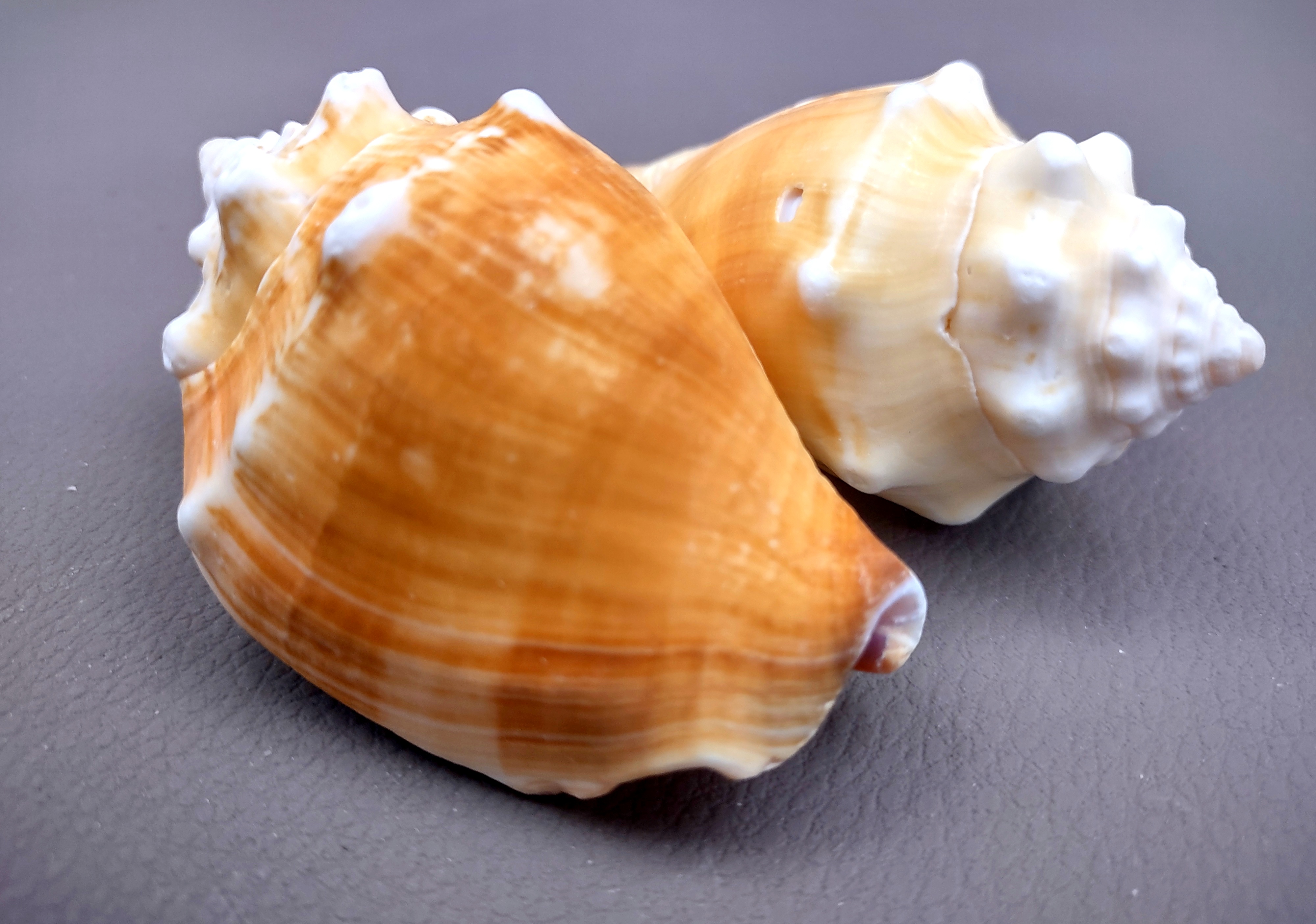
 Fighting Conch
🦀Strombus alatus
ID Tip
Chunky, heavy shell with a wide flared outer lip. Orange-brown color. Called 'fighting' because they use their pointed operculum to flip themselves over.
Fun Fact
Fighting conchs are herbivores that graze on algae. They're one of the few shells you'll see actually moving on the beach — they leap and hop using their muscular foot.
 Rare
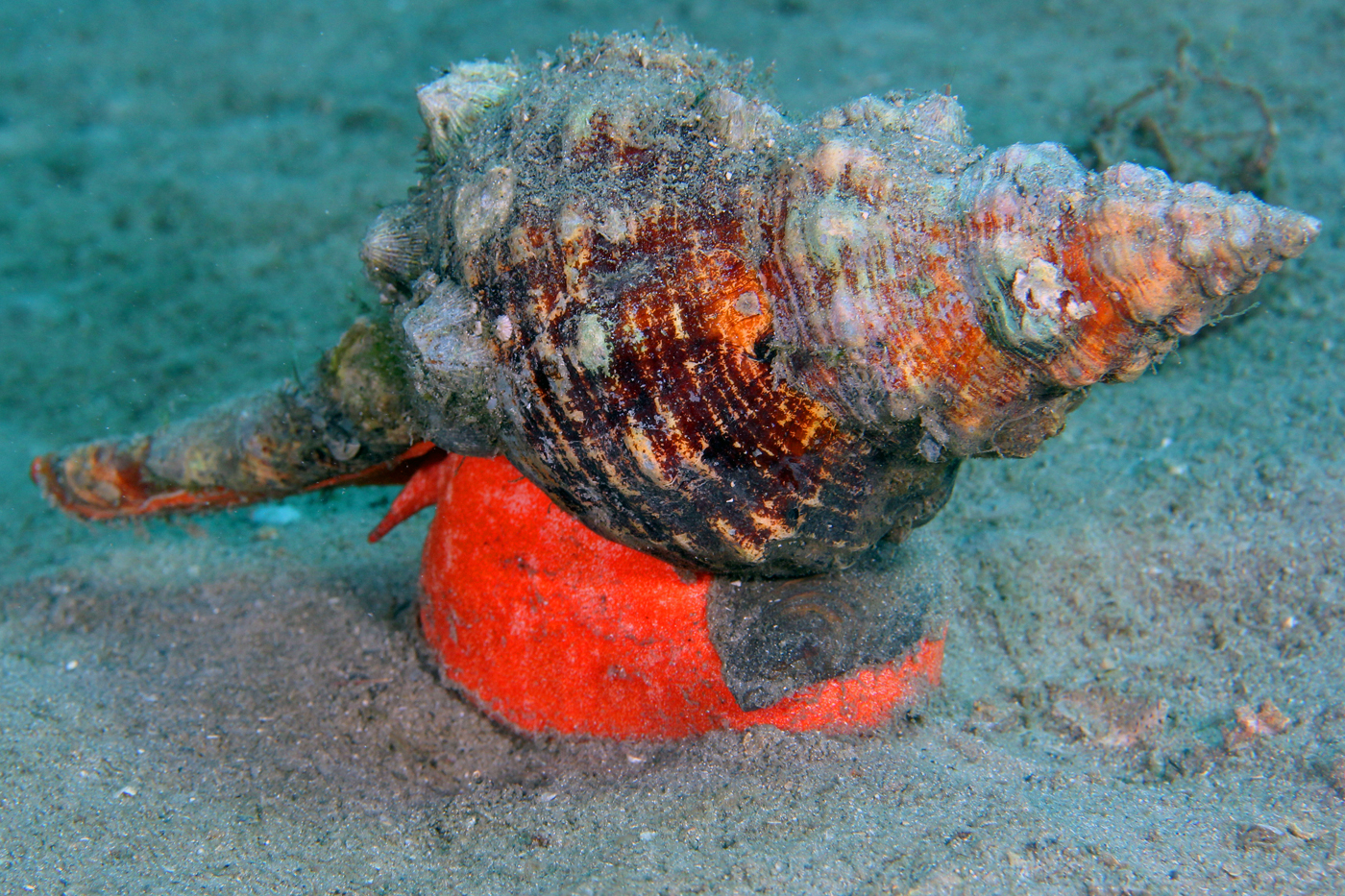
Rare Horse Conch
🐴Triplofusus giganteus
ID Tip
Massive, heavy, elongated with a tall spire. Young ones are bright orange. Florida's state shell since 1969. You'll know it when you see it.
Fun Fact
The horse conch is the largest predatory snail in North America. It eats other large shells including lightning whelks and tulip shells.
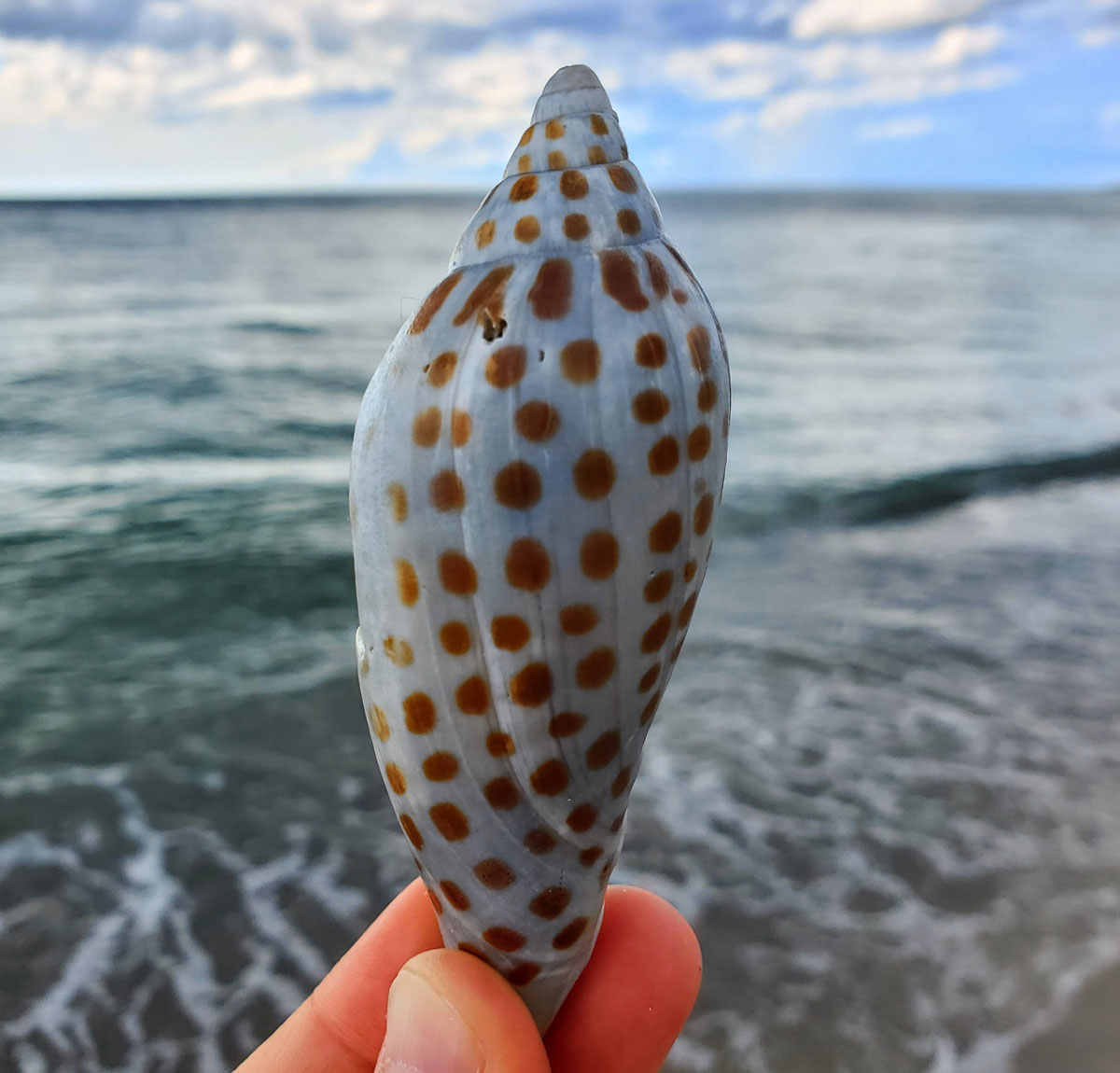 Very Rare
 Junonia Shell
✨Scaphella junonia
ID Tip
Smooth, elongated with a pointed spire and distinctive rows of brown square spots. The holy grail of AMI shelling. Local papers used to run photos of lucky finders!
Fun Fact
Junonias live in deep water (30–100 ft) and only wash ashore after storms. Finding one is considered extremely lucky — some shellers search for years.